

Those Published “17,000 Hydroxychloroquine Deaths” Never Happened
- Those Published “17,000 Hydroxychloroquine Deaths” Never Happened
by David Gortler, Pharm.D the Brownstone Institute, via https://www.zerohedge.com/
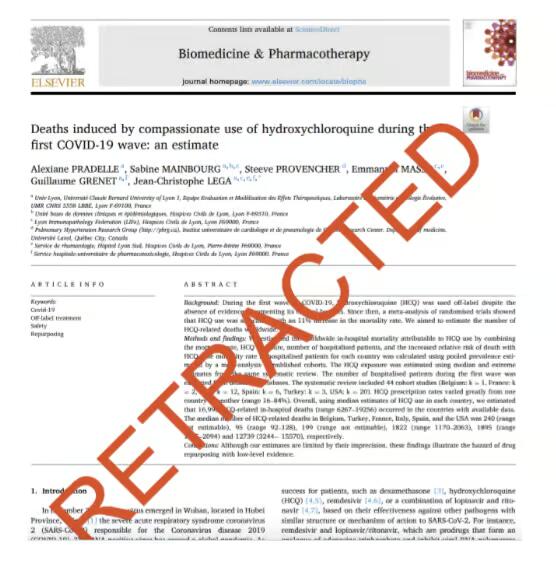
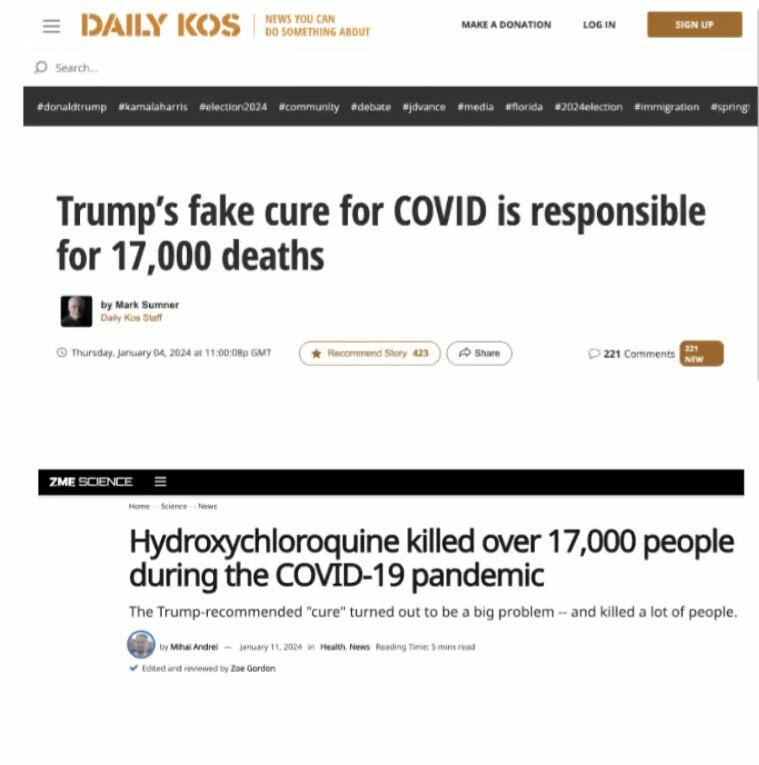
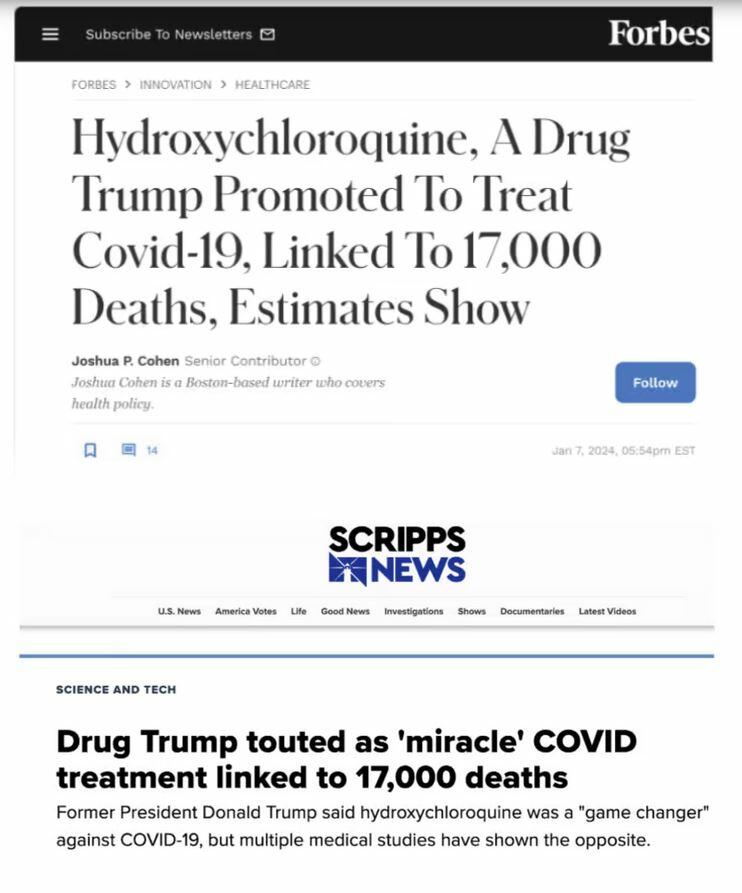
Early January of 2024, Americans learned about the publication of an article from Elsevier’s Journal of Biomedicine and Pharmacotherapy overseen by Dr. Danyelle Townsend, a professor at the University of South Carolina College of Pharmacy’s Department of Drug Discovery and Biomedical Sciences.
–
As Editor-in-Chief, Dr. Townsend reviewed, approved, and published the article titled: “Deaths induced by compassionate use of hydroxychloroquine during the first COVID-19 wave: An estimate.”
–
The article was always a hypothesized estimate of people that might have died, but now even that estimate has been retracted. The reason for the retraction was that the Belgian dataset that was one of the bases for the piece was found to be “unreliable” (but in reality was fraudulent). The article also repeatedly referenced the New England Journal of Medicine’s 2020 RECOVERY trial. The RECOVERY trial is well known to be a deeply flawed study which, in addition to implementing late treatment in severely ill Covid patients, used extremely high doses of HCQ.
–
The now retracted publication authors were all French or Canadian, with the primary author a pharmacist by the name of Alexiane Pradelle. According to a rudimentary internet search, Dr. Pradelle had never published before. Subsequently, listed authors were degreed as physicians, pharmacists, and/or professors of their respective disciplines. The main, corresponding author, Jean-Christophe Lega, runs the Evaluation and Modeling of Therapeutic Effects team at the University of Lyon.
–
Hydroxychloroquine’s Fabled Safety History Contrasts Data
In addition to being a hypothesized estimate, the article also attacked the legendary safety of HCQ, contradicting centuries of the safety of quinolines as a class.
–
HCQ, chloroquine and quinine are structurally and pharmaceutically/mechanistically related, sharing the same quinoline structural group. The original iteration of quinine was a very fortunate discovery that dates back to the 1600s (at least) as a medicinal tipple used by Jesuit missionaries in South America. It is naturally found in the bark of the Cinchona tree (also called a “Quina-Quina” tree).
–
read more.

end